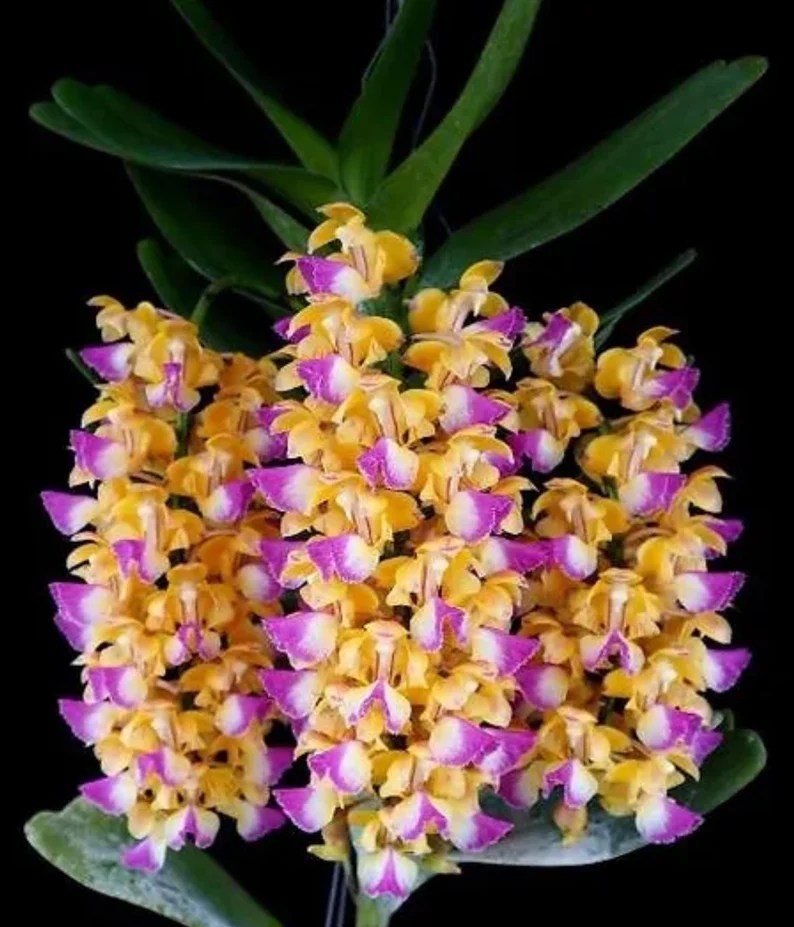
Culture guide
Aerides Culture
Step 1: Understand the Plant’s Requirements Species Information Identify : Determine the specific species of Aerides you have (e.g., Aerides odorata, Aerides quinquevulnera). Different species may have slightly different care requirements. Natural Habitat Environment : Research the natural habitat of your Aerides orchid. This typically includes high humidity, bright but indirect light, and warm temperatures. Step 2: Provide Proper Light Lighting Needs Bright Indirect Light : Place your Aerides orchid where it will receive bright, indirect light. Avoid direct sunlight, which can scorch the leaves. Supplemental Light : In low-light conditions, consider using fluorescent grow lights to supplement natural light. Positioning East or West Window : A location near an east or west-facing window is usually ideal. North-facing windows may be too dim, while south-facing windows might be too intense. Step 3: Maintain Correct Temperature and Humidity Temperature Daytime : Aim for temperatures between 75-85°F (24-29°C) during the day. Nighttime : Allow temperatures to drop slightly to 60-70°F (15-21°C) at night. Humidity High Humidity : Maintain high humidity levels (50-70%). You can use a humidity tray, a room humidifier, or place the orchid in a bathroom with good light. Misting : Light misting can help, but avoid over-wetting the leaves, which can lead to fungal issues. Step 4: Watering and Fertilizing Watering Frequency : Water the Aerides orchid thoroughly when the potting medium is dry. This may be once a week or less, depending on the environment. Method : Water thoroughly until water drains out of the bottom of the pot. Avoid letting the plant sit in standing water. Fertilizing Type : Use a balanced orchid fertilizer (e.g., 30-10-10) or a fertilizer specifically designed for orchids. Frequency : Fertilize every 2-4 weeks during the growing season (spring and summer). Reduce fertilization during the dormant period (fall and winter). Step 5: Repotting and Potting Medium Potting Medium Type : Use a well-draining orchid mix, typically consisting of bark, perlite, and sometimes sphagnum moss. Drainage : Ensure the pot has adequate drainage holes to prevent root rot. Repotting Frequency : Repot every 1-2 years or when the plant outgrows its pot or the potting medium breaks down. Procedure : Gently remove the orchid from the pot, trim any dead or damaged roots, and replant in fresh orchid mix. Step 6: Pest and Disease Management Common Pests Types : Watch out for common pests such as aphids, scale, and spider mites. Treatment : Use insecticidal soap or neem oil to treat infestations. Regularly inspect the plant for signs of pests. Diseases Fungal and Bacterial Issues : Avoid overwatering and ensure good air circulation to prevent fungal and bacterial diseases. Treatment : Use appropriate fungicides or bactericides if needed. Remove any affected plant parts. Step 7: Encourage Blooming Blooming Cycle Trigger : Aerides orchids typically bloom once or twice a year. Ensure they have proper light, temperature, and watering to encourage blooming. Rest Period : Allow the plant a period of rest with reduced watering and fertilizing if it’s not blooming. Care During Bloom Support : Provide support for flower spikes if needed to keep them upright. Deadheading : Remove spent flowers to encourage new growth and maintain plant health. Step 8: General Care and Observation Regular Checks Inspection : Regularly check the plant for signs of stress, pests, or diseases. Adjustments : Make adjustments to care routines based on the plant’s response and changing seasons. Documentation Notes : Keep a care journal to track watering schedules, fertilizing, and any issues that arise. This helps in understanding the plant’s needs and improving care over time.
Culture notes carried over from the nursery's own guides — DRAFT until confirmed with Debbie Chism.